Choosing Possibility in an Uncertain World
Global conflict, rising costs of living, and the rapid pace of technological change can create a sense of uncertainty for us as adults, and increasingly for our young people. The volume of information alone can feel relentless.
But perhaps the more important question is not simply what is happening, but how we are experiencing it.
Because the way we experience the world, and the way we speak about it, quietly shapes how our young people come to see it themselves.
I often find myself pausing before I respond to questions, both with my own children at home and with our students here at school.
Earlier this week, I shared a quote with my team from the Stoic philosopher Seneca:
“We suffer more often in imagination than in reality.”
It led to a simple but important reflection. While we cannot control many of the events around us, we do have control over how we respond to them. And it is often our immediate, unfiltered reactions that have the greatest impact on the people around us, especially our children.
Modern research helps explain why this matters.
In a short and accessible talk from the Greater Good Science Center, which I’ve included below, psychologist Roy Baumeister describes what is known as a negativity bias. It is our natural tendency to notice, remember, and give greater weight to negative information than positive.
In earlier times, this bias helped us survive. Today, in a world of constant updates, headlines, and notifications, it can distort our sense of reality.
As Hans Rosling explained so clearly, we also carry what he called a dramatic instinct. We tend to assume that things are getting worse, even when the broader picture is more balanced.
The image below captures this idea in a simple but powerful way.
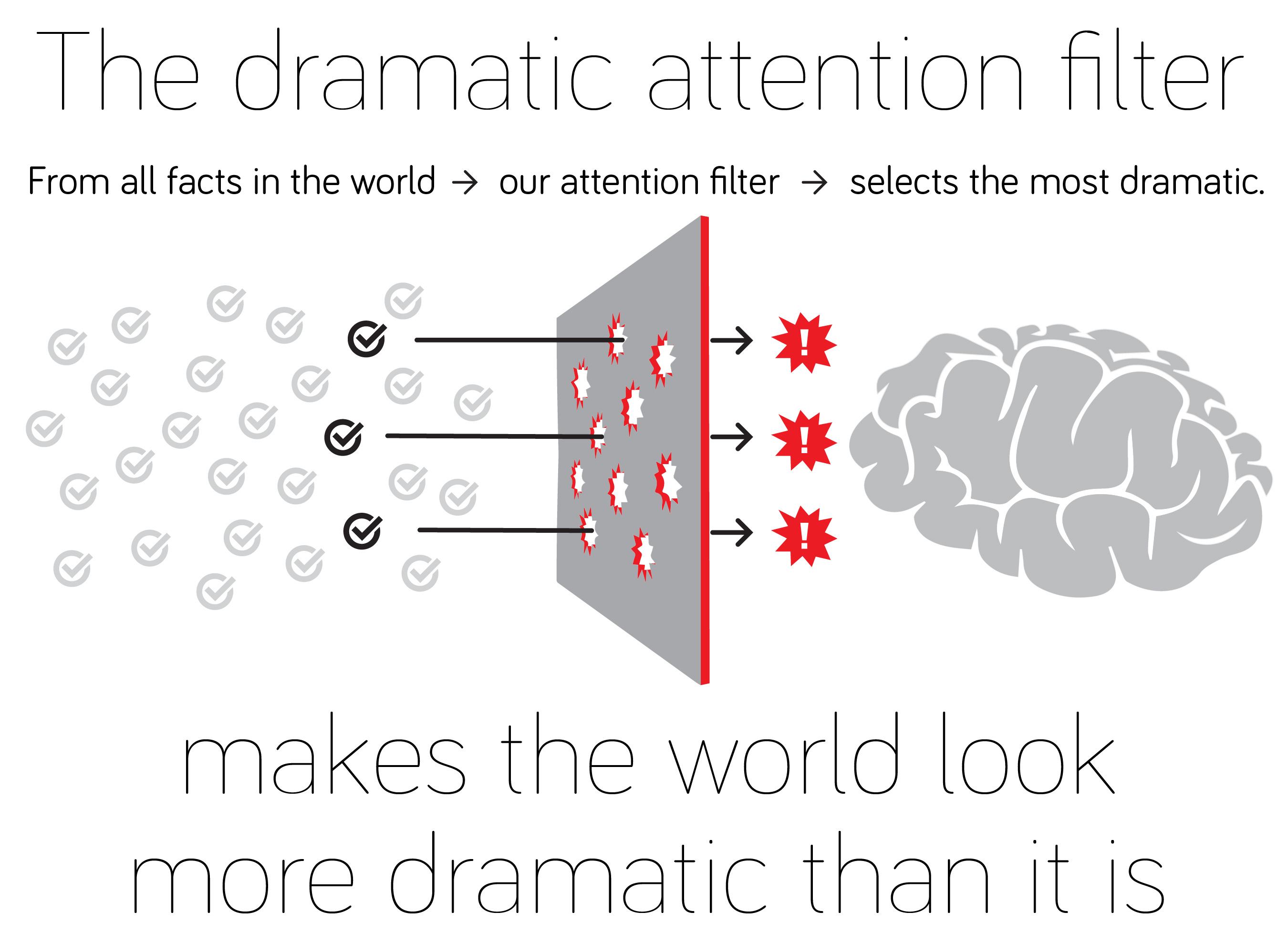
The world has always moved in cycles. Periods of disruption, uncertainty and change are not new. They are part of the human story. While the details may differ, the pattern is familiar. What often feels unprecedented is, in many ways, simply unfamiliar to us.
And yet, perhaps the most reassuring perspective is much closer to home.
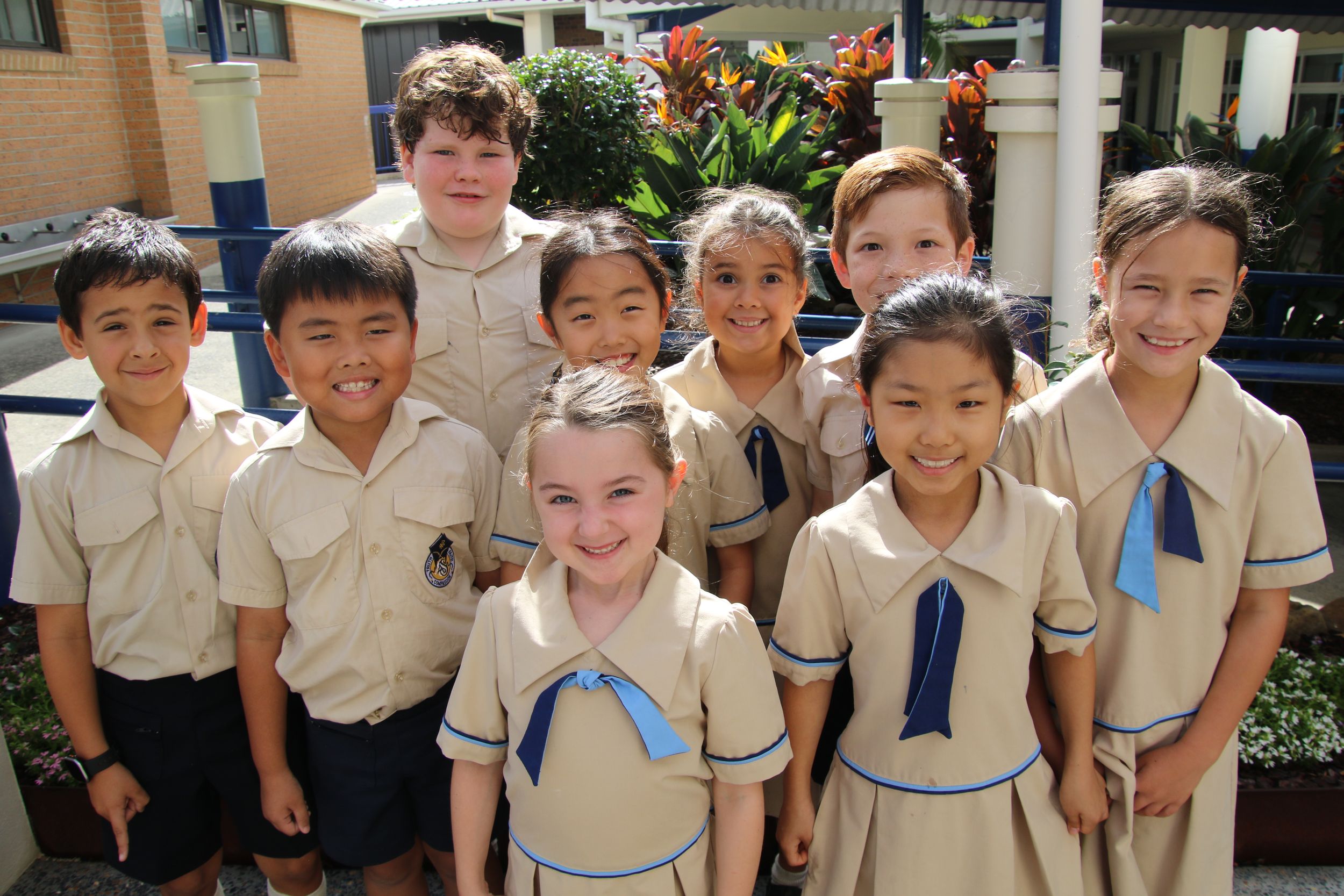
You only need to spend a few minutes walking through our school, through a classroom, on the playground, at a rehearsal or on the sports field, to be reminded that everything is, in fact, more than okay. In our young people, we see kindness without agenda, joy without hesitation, curiosity without fear, and a genuine capacity to connect with one another. At times when the world feels uncertain, it is often our children who quietly remind us what is still good, and what is still possible.
This is where our role as adults matters most.
Our children are not just observing the world. They are observing how we respond to it. If we react with anxiety, they feel it. If we frame change as instability, they absorb it. But if we model calm, perspective, and curiosity, they learn to approach the world with confidence, balance and hope.
This does not mean ignoring reality or pretending challenges don’t exist. It simply means choosing how we frame them. While much is outside our control, much is also within it, our attitude, our response, and the example we set each day.
At All Saints, our theme this year is Possibility, and this idea sits right at its heart. It’s not about perfect conditions or easy moments. It’s about helping our young people see clearly, stay grounded, and move forward with confidence, even when things feel uncertain.
Possibility also forms part of our school vision, and perhaps now more than ever, it is a mindset worth holding onto.
Matt Corbett
Principal